Should I Trade-In or Sell My Car Privately in NJ to Maximize Trade-In Value?
Posted Thursday, May 07, 2026
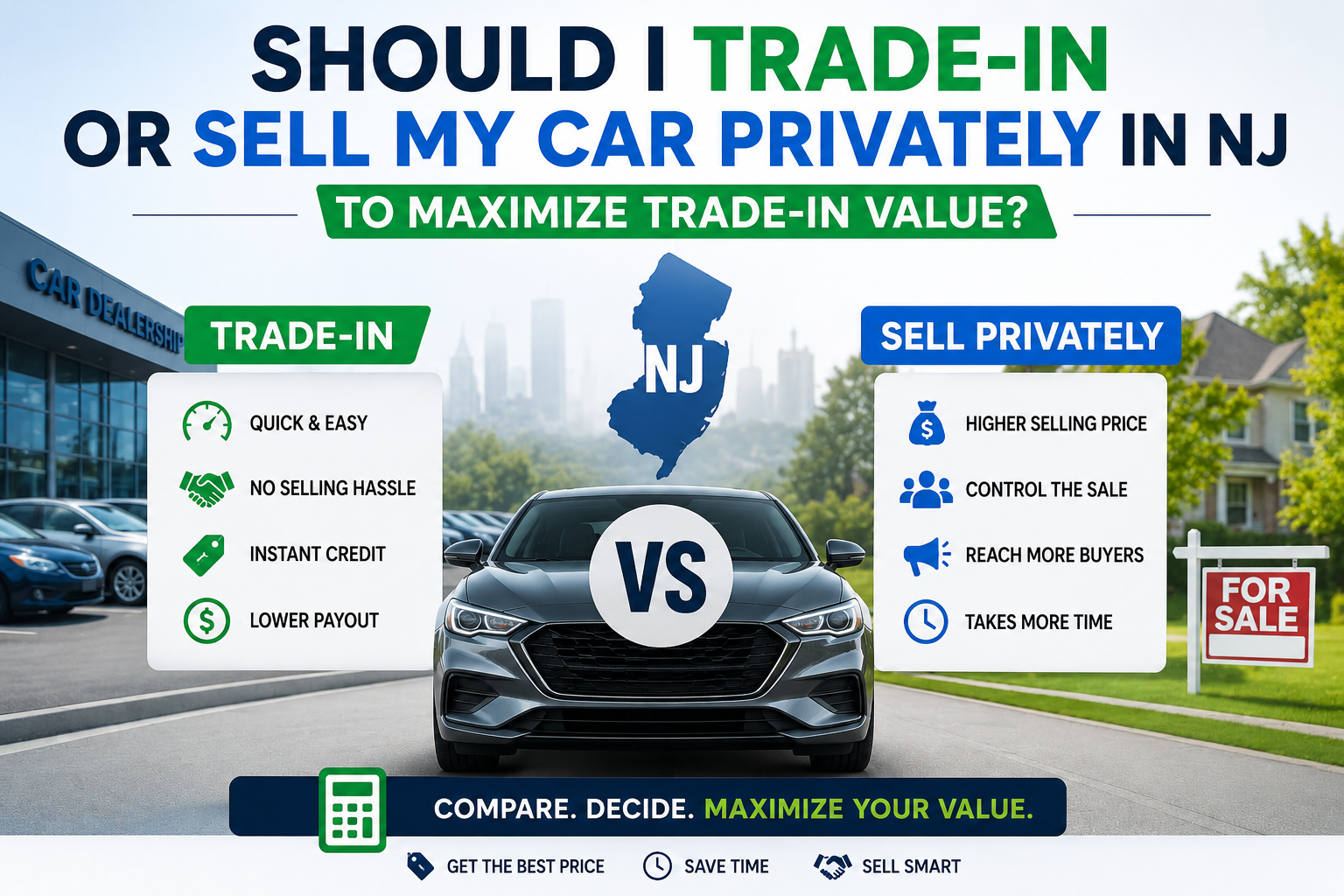
Deciding whether to trade in your current car at a dealer or sell it privately is one of the biggest choices when you’re ready to buy a new car. This guide compares trade-in vs private sale in New Jersey, focusing on which option gets you the best value after considering taxes, hassle, sale price, and the local used car market. If you’re looking to sell your used car or trade in your current vehicle, understanding market value, trade-in offers, and the sales tax implications in New Jersey can dramatically affect the overall value you walk away with.
What is the typical trade-in value versus private sale value for a used car in New Jersey?
Trade-in value at a dealership often comes in below the private sale price because dealers need room to recondition and profit when reselling a used cars. The trade-in offer you receive is based on retail value and wholesale expectations in the used car market, and dealers will consider the vehicle’s current condition, mileage, and resale value. In many cases, the value of your trade-in will be lower than the sale price you could get selling it privately.
A private sale might fetch a higher sale value because you can set your asking price closer to market value and avoid the dealer markup. Selling it to a private buyer often yields a better overall value, but selling privately requires more effort: advertising the car online, meeting buyers, and handling paperwork like the bill of sale. For many sellers, the higher net proceeds in a private sale offset the extra time and hassle.
How does selling your car privately compare to trading it in at a dealership in terms of hassle?
Selling your car privately is usually more time-consuming than trading it in to a dealer. When you sell privately, you must create listings, respond to inquiries, show the vehicle, negotiate a price, and complete a bill of sale and title transfer. If you’re inexperienced, selling it privately can feel like a major project, and safety and payment issues can add stress. However, the reward is often a higher price for your new car, financing flexibility, and maximized sale price.
Trading in your car at a dealership is typically the least hassle. A dealer can appraise your vehicle in minutes, provide a trade-in offer, and roll the trade-in value into the purchase price or down payment for your new vehicle. This convenience is especially valuable if you want to trade in your old car while buying a new car the same day. For sellers who prioritize simplicity over sale value, the dealership route is appealing.
Will New Jersey sales tax affect whether I should trade in or sell my vehicle privately?
New Jersey’s sales tax rules can make trading in more attractive because the trade-in is deducted from the purchase price of your new vehicle before calculating sales tax. That means if you trade in your car worth $5,000 and buy a new car for $30,000, you pay sales tax only on $25,000, lowering the price of your new vehicle. This trade-in tax benefit effectively increases the overall value of a dealer trade-in compared to a private sale.
When you sell privately, the buyer typically pays sales tax when they register the vehicle, and you, as the seller, don’t get a tax offset on your next purchase. If you’re buying a new vehicle in New Jersey, factor the trade-in tax advantage into your decision—sometimes the tax savings can offset the lower trade-in offer and make trading in the better financial option.
How does the dealership in New Jersey determine a trade-in offer?
Dealers use several inputs to value your car: wholesale and retail value in the local used car market, vehicle history, current car condition, mileage, and the dealership’s inventory needs. They reference industry guides for a car’s value and consider repair costs and reconditioning time. If a dealer believes they can resell your vehicle quickly at a profitable price, your trade-in value will likely be higher.
To get the best trade-in offer, prepare your vehicle by addressing minor maintenance issues, gathering service records, and cleaning the car. Getting multiple trade-in estimates from different dealers in NJ helps you understand your vehicle’s trade-in value and leverage offers when negotiating the price of your new vehicle.
What are the advantages of a private party sale when selling it privately in NJ?
Selling to a private buyer typically yields a higher sale price because private party buyers often pay closer to the retail value of the car. You’re not selling to a business that needs room for margin, so the price of your vehicle can better reflect market demand. If you’re trying to maximize the value of your used vehicle, selling privately is often the best way to sell your used car for top dollar.
Other benefits of a private sale include direct negotiation with buyers, flexibility on sale terms and timing, and potential to find buyers who value specific features that dealers might overlook. However, success depends on effective marketing, accurate pricing aligned with the car market, and readiness to handle paperwork like a bill of sale and title transfer required in New Jersey.
What risks should I consider when selling my car privately versus trading it in?
Selling privately brings risks: fraud, no-show buyers, and payment security. You’ll need to verify funds, manage test drives safely, and ensure the paperwork fully transfers responsibility to the buyer. A buyer might request refunds or dispute issues later, so providing accurate descriptions and a detailed bill of sale protects you. A private sale might also leave you responsible for NJ-specific requirements during transfer.
Trading eliminates many of those risks. The dealer handles title transfer and assumes liability once the sale is complete. Selling to a dealership reduces your exposure to scams and makes the process safer and faster, albeit often at a lower sale value.
How can I estimate the market value or sale price before I sell my vehicle?
Start by using online tools to value your car, checking local listings for comparable used cars, and reviewing retail value vs. wholesale value. Resources that show the car market and a vehicle’s trade-in value give a baseline. Compare listings for similar mileage, trim level, and condition in New Jersey to get an accurate estimate of what buyers will pay privately or what dealers might offer.
Consider getting multiple offers: use online dealer appraisal tools, visit a few dealerships to receive trade-in offers, and list the car privately to test buyer interest. This gives you a range of sale value vs trade-in value and helps you choose the best route based on your priorities—time, convenience, or maximum proceeds.
Should I repair or sell my car as-is when trying to get the best value?
Minor repairs and a thorough detailing can increase the resale value and minimize buyer objections, making it worthwhile before selling privately or trading in. Fixing simple issues—brake lights, tires, or cosmetic blemishes—can boost both the car’s value and buyer confidence. Documenting recent maintenance can also support a higher sale price or trade-in offer.
However, expensive repairs may not pay off. Dealers and private buyers will deduct for significant mechanical issues. When evaluating whether to repair, compare the cost of repair to the likely increase in sale value. If the cost exceeds the expected return, consider selling the car as-is to a dealer or to a private buyer at a discounted price.
If I’m buying a new car in NJ, how does trading in affect the purchase price of my new car?
Trade-in value is typically applied as a down payment on the price of the new vehicle, reducing the purchase price and the financed amount. Because the trade-in is deducted before sales tax, you also pay less tax on the price of your new car in New Jersey, which further lowers your effective purchase price. This combination can reduce monthly payments and the purchase price of your new vehicle.
Be cautious: dealerships may combine the new car price and trade-in negotiations. It’s smart to negotiate the price of the new vehicle separately from the trade-in offer to ensure you’re getting a fair deal on both. Know your trade-in’s value beforehand to prevent a dealer from offering a lower trade-in while inflating the price of the new car.
When is trading the best option over selling it privately?
Trading in is often best when you value speed, convenience, and tax benefits. If you’re ready to sell and buy simultaneously, the dealer handles paperwork, reduces sales tax, and simplifies payment. This is ideal if you want to avoid the hassle of listing the car, meeting strangers, and managing a private transaction. For many sellers, the trade-in tax advantage in New Jersey makes the trade-off in sale price acceptable.
Other scenarios where trade-in may be better include negative equity situations (where the loan balance exceeds the car’s value), when you need to offload the car quickly, or when the vehicle has mechanical issues that make finding a private buyer difficult. Dealers will accept many vehicles that private buyers won’t, which can be a deciding factor.
How should I choose between “sell or trade” for the best overall value in New Jersey?
Decide by comparing net proceeds and convenience. Calculate the expected private sale price minus the time and potential costs (ads, safety measures, minor repairs). Then evaluate the net trade-in value, including the sales tax savings on your new car and the convenience factor. Create a simple comparison: private sale net vs trade-in net after tax savings to see which yields the best overall value.
If maximizing cash proceeds is your primary goal and you have time, selling privately usually yields the best overall value. If reducing paperwork, avoiding risk, and gaining sales tax advantages matter more, trading in at a dealership in New Jersey could be the better choice. Use multiple appraisals and local market research to inform your decision.
Conclusion:
Choosing between trade-in and private sale in New Jersey depends on your priorities. Selling privately often produces the highest sale value and can maximize the price of your used car if you’re willing to handle the extra work and risks. Trading in provides convenience, minimizes hassle, and offers New Jersey sales tax advantages that can raise the effective value of a dealer trade-in.
Summarize your goals: if you want maximum cash and can manage listings and buyer interactions, consider a private sale. If you want speed, safety, and potential tax benefits when buying your next car, a trade-in at a reputable dealership may be the best path. For buyers and sellers in NJ who want professional, local assistance, Rev Auto Wholesalers, a Used Car Dealership in Paterson, NJ, can appraise your vehicle and discuss trade-in offers or options to sell your used car privately. Whether you’re comparing used car dealers or browsing used cars for sale, Rev Auto Wholesalers can help you determine the best strategy to get the best value for your vehicle.