How to Avoid Flood-Damaged or Salvage Cars When Buying Used in New Jersey
Posted Monday, Jun 08, 2026
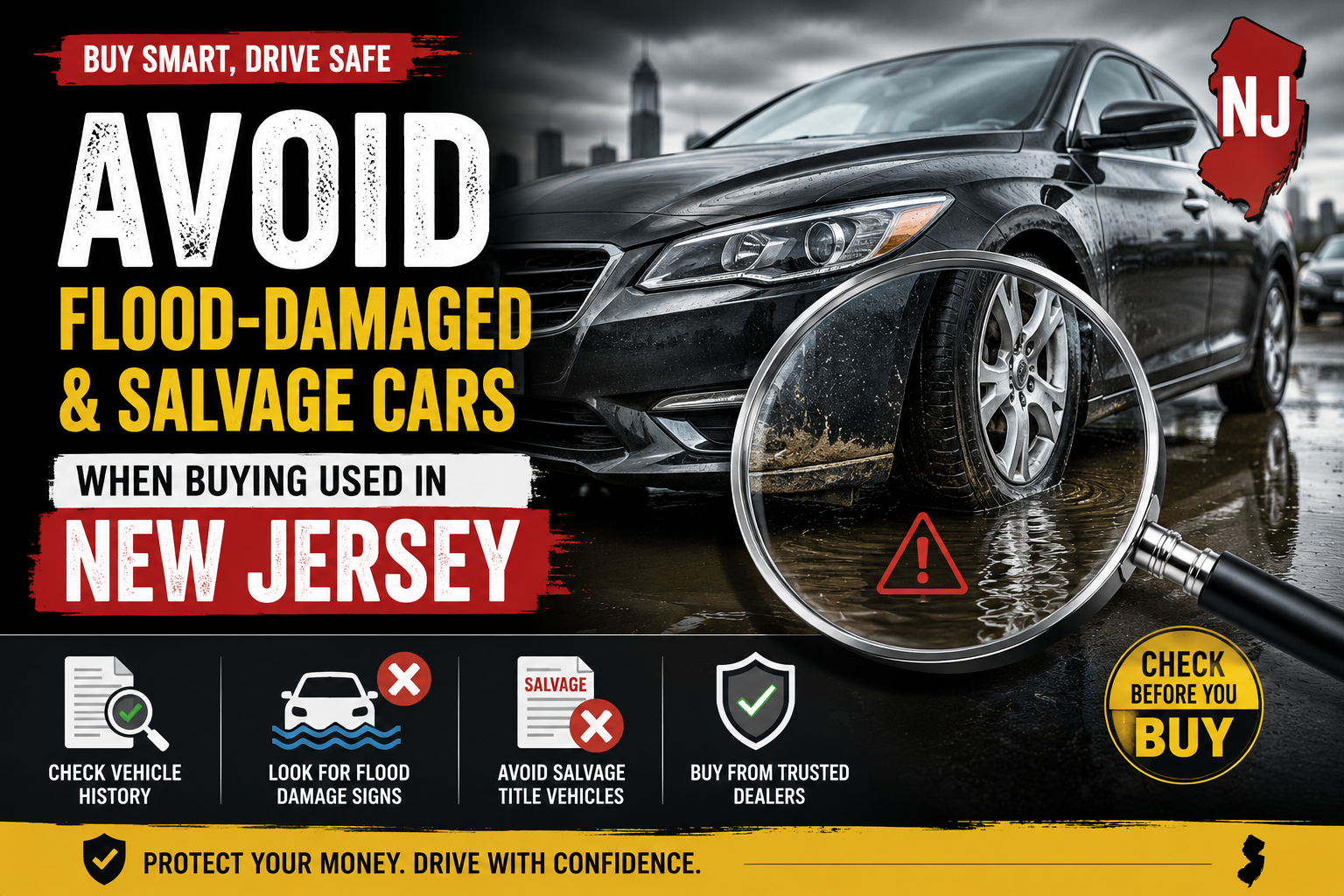
Buying a used car in New Jersey can save money, but the state’s history of hurricanes, torrential storms, and coastal flooding raises the risk of encountering a flood car or flood-damaged vehicle. Knowing how to spot signs of water damage and use resources like vehicle history reports helps car shoppers avoid salvage title traps, title washing schemes, and unsuspecting purchases of water-damaged or total-loss vehicles. This guide explains practical steps to inspect, verify, and buy with confidence.
How can I spot signs of flood damage when buying a used car?
Start by searching for telltale signs of flood damage, such as musty odors, mildew, water stains, and the smell of mold in upholstery and carpet. Floodwater often soaks into seats, floorboards, and trunk carpets, leaving visible waterlines and a pungent odor of mold and mildew. Check upholstery seams and underneath floor mats for water stains or a damp, waterlogged feel that may indicate past immersion.
Look for rust or corrosion in places where it usually doesn’t form quickly: inside door jambs, under the dashboard, around seatbelt anchors, and in the spare tire well. Corrosion of electrical components like the stereo, dashboard switches, or air conditioner controls can be a red flag for water-damaged or submerged in water incidents. If anything smells musty, appears stained, or looks out of place, that could be an indicator of flood damage.
What should I inspect under the hood for water damage or floodwater signs?
Open the engine compartment and inspect for standing water stains, rust on metal components, muddy residue, or silt in corners. Floodwater can hide in the engine compartment and affect the alternator, starter motor, and other electrical and mechanical parts. Check the oil dipstick and radiator fill cap for a milky, frothy appearance, which suggests water contamination in the engine oil or coolant.
Examine wiring harnesses, connectors, and the fuse box for corrosion or rust. Electrical components are often the first to fail after water-damaged events. If the car was repaired after being damaged by floodwaters, ask for repair records and verify that a trusted mechanic inspected and tested electrical and mechanical systems thoroughly before resale.
How can I use the vehicle history report to avoid a flood-damaged vehicle?
Always review a vehicle history report, such as a Carfax report or VIN-based history report, before purchasing a used vehicle. Look for keywords like "salvage title," "water damage," "total loss," "flood," or "declared a total loss." The National Insurance Crime Bureau’s VINCheck (NICB’s VINCheck) and other vehicle history report services can reveal if the vehicle has been reported as flood-damaged or had a salvage title issued in another state, which may point to title washing attempts.
Be aware of title washing, where a flood-damaged car is moved between states to get a clean title. Cross-check the vehicle identification number (VIN) against multiple databases, including the NICB, BBB, and CARFAX, and compare mileage records, ownership history, and accident entries. If reports are inconsistent or the history looks too good to be true, that is a red flag.
What are common telltale signs of water damage inside the cabin?
Inside the cabin, check the carpet, upholstery, and trunk lining for water stains, discoloration, and a damp or musty odor. Remove floor mats and inspect the area where the carpet meets the firewall and under seats for mildew, mud, or salt deposits. A moldy, musty, or strong “old water” smell may indicate that the vehicle was previously submerged or exposed to standing water for an extended period.
Examine seatbelt retractors, seat tracks, and under-seat connectors for rust or stiffness. Water-damaged vehicles often have electrical glitches in interior controls such as power windows, windshield wipers, and the dashboard display. Test the air conditioner, heater, and all interior electrical features; malfunctioning systems may be due to previous flood damage.
Why should I have a mechanic inspect a used car for flood indicators?
Bringing the car to a trusted mechanic helps find hidden water damage that a casual inspection may miss. A professional mechanic will check for water in the transmission, differential, and wheel bearings, as well as test electrical components that commonly fail after floodwater exposure. They can also identify signs of water-damaged repairs or parts replaced after a flood.
Ask your mechanic to perform a compressed air check of the brake lines, inspect the engine compartment for water intrusion, and lift the car to look for corrosion on the undercarriage, frame, and exhaust system. A thorough inspection helps avoid buying a salvage vehicle or one with latent problems that could be costly to repair.
How can the VIN and VINCheck help me avoid salvage or flood cars?
Use the vehicle identification number (VIN) to run searches on the National Insurance Crime Bureau’s VINCheck and other VIN-based services. The VIN reveals the vehicle’s title history, past insurance claims, and whether it was declared a total loss due to flood or other damage. VIN checks often flag "flood vehicle" or "water-damaged" notations and can show if the car had a salvage title in another state before title washing.
Compare the VIN on the dashboard, driver’s door jamb, and vehicle documents to ensure they match. Inconsistencies could indicate tampering or title washing. Always pull multiple reports and consider paying for a comprehensive vehicle history report; the small cost can protect you from unknowingly buying damaged cars or a flood-damaged vehicle.
What red flags suggest a car may have been declared a total after a hurricane or flood?
Red flags include unusually low prices that seem "good to be true," inconsistent or missing service records, recent wholesale repairs without detailed invoices, and a seller who pushes for a quick sale. If an unsuspicious buyer finds a model recently affected by Hurricane Ida or other regional storms, be especially cautious. Flood-damaged vehicles often resurface after major storms when unscrupulous sellers try to offload them quickly.
Check for title brands such as salvage title, rebuilt, or previously declared a total loss. Ask the seller direct questions: "Was this vehicle ever submerged in water?" or "Has this vehicle been repaired after floodwater damage?" If the answers are evasive or the seller is a private seller trying to conceal history, walk away and seek vehicles from reputable used car dealerships or dealers with transparent records.
How can I avoid title washing and ensure the vehicle’s title is clean?
Title washing happens when a flood-damaged vehicle is moved to another state to get a clean title. To avoid this, check the vehicle’s title across state databases and get a vehicle history report that includes multi-state title records. Verify the vehicle’s title status by examining the title document for brands like salvage, rebuilt, or water damaged.
Contact the Better Business Bureau (BBB) and look for dealer reviews; reputable used car dealers will provide a clear vehicle history report. Use tools from the NICB and AAA Club Alliance resources to cross-check the VIN. If a seller claims a "clean title" but the VIN history shows a salvage or flood title previously, that is a major red flag indicating title washing or attempted concealment.
What should private buyers know to avoid being an unsuspecting buyers of flood cars?
Private buyers should be extra cautious: always meet in daylight, bring a checklist, run a VIN check, and request full maintenance receipts and insurance claims history. Be skeptical of a seller who refuses a pre-purchase inspection by your trusted mechanic or tries to rush the transaction. Many unsuspecting buyers have ended up with water-damaged cars after trusting incomplete descriptions or verbal assurances.
Test-drive the car and exercise all electrical systems: windshield wipers, headlights, turn signals, dashboard gauges, seat heaters, and the air conditioner. Check the spare tire well and trunk for silt or mud. If anything seems off — electrical glitches, damp spots, or a faint odor of mildew — stop the purchase and seek another vehicle from reputable used car dealers or a used car dealership that documents vehicle history thoroughly.
Where should I buy to reduce the risk of flood-damaged or salvage cars in New Jersey?
Buy from reputable sources: certified used car dealerships, established car dealers, or well-reviewed independent sellers who provide full vehicle history reports. Dealerships often perform inspections and disclose salvage titles; look for sellers who provide Carfax or a NICB VIN report and who welcome inspections by a trusted mechanic. Check reviews on BBB and look for dealers aligned with the AAA club alliance for added confidence.
Consider purchasing from local used car dealerships that offer transparent policies and warranty options. While private sellers can be honest, used car dealership inventory often includes certified pre-owned cars with documented vehicle history and service records. If buying locally mention flood risk in your questions and insist on seeing repair invoices and vehicle history reports to avoid purchasing damaged cars.
What final checks should I do before completing a purchase to avoid flood-damaged vehicles?
Before finalizing a purchase, get a comprehensive vehicle history report, VINCheck, and an independent inspection from a trusted mechanic. Confirm the vehicle’s title status, inspect for water stains, mildew, and electrical issues, and validate all VIN locations match the paperwork. Consider having the mechanic run diagnostics to check for water-related electrical faults or engine contamination.
Also, confirm the insurance company’s stance: ask if the vehicle has been declared a total loss in a recent hurricane or flood event. If a vehicle was declared a total previously, it may carry a salvage or rebuilt title which can complicate insurance and resale. Taking these final steps will help protect you from becoming an unsuspecting buyer of a flood-damaged or salvage car.
Conclusion:
Avoid buying flood-damaged or salvage cars by using VIN checks, vehicle history reports like Carfax, NICB’s VINCheck, thorough inspections, and trusted mechanics. Look for signs of water damage such as mold and mildew odors, water stains on upholstery and carpet, rust in unusual places, and electrical issues. Be wary of title washing, unusually low prices, and evasive sellers. Always verify the vehicle’s title and history report before purchase.
If you’re shopping in New Jersey, consider working with reputable local sellers like Rev Auto Wholesalers, a Used Car Dealership in Paterson, NJ, who provide transparent vehicle history reports and inspections. Choosing trusted used car dealers or a reliable used car dealership reduces the risk of buying damaged cars and increases your chances of finding trustworthy used cars for sale. Protect your investment and drive with confidence.